
News
Latest Media & Press
Ultimate Guide to MEP Systems in Construction
12/11/2025
MEP Systems in Construction: Ultimate Guide to Mechanical, Electrical & Plumbing
MEPs are critical elements of building design that ensure occupant safety and comfort, enhance building functionality and efficiency, ensure regulatory compliance, increase cost control and more. Learn about their vital role in construction projects below.
MEP Construction Systems Overview:
What Are MEPs in Construction?
MEP stands for mechanical, electrical and plumbing, and refers to the engineering or services of these three components in relation to building design and construction.
MEP engineering covers the three primary technical systems that complete a building and make it inhabitable, functional and safe. It is a vital and heavily relied-upon element of construction, and as of 2025, the global market value of MEP services is predicted to reach $301.93 billion by 2032.
From conception to implementation to upkeep, MEP engineering is inextricably linked to the planning, design, construction and maintenance of a building. If bricks are the bones of a building, you can consider MEP systems its veins.
What Are the Types of MEP Building Systems?
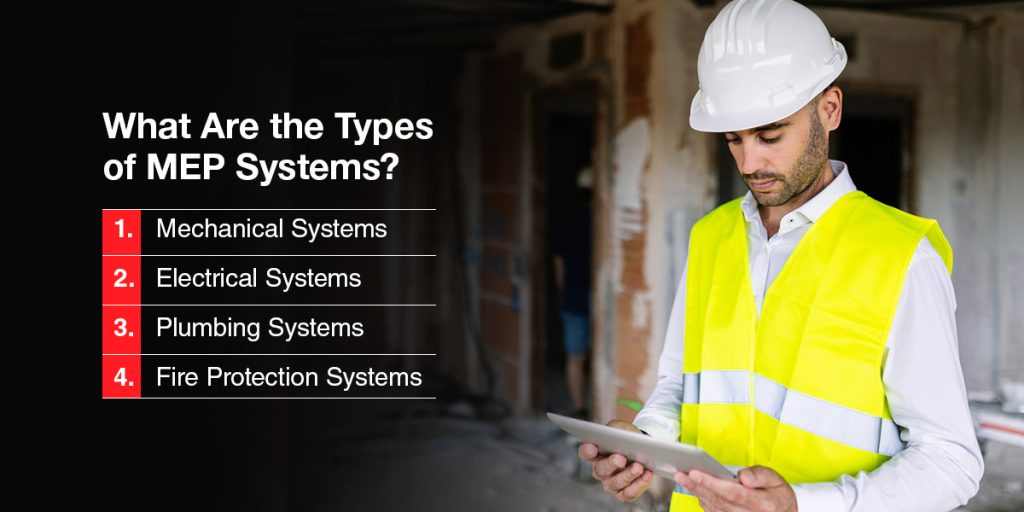
The main types of MEP systems are:
1. Mechanical Systems
Mechanical systems comprise every mechanical element within a building, primarily revolving around heating, ventilation and air conditioning (HVAC) systems.
The core elements of a building’s mechanical system include:
- Heating systems: These include boilers, furnaces and other systems that provide a building with heat.
- Ventilation: This comprises ductwork, fans and any other systems that contribute to air circulation, quality and regulation.
- Air conditioning: This includes air conditioning units, cooling systems and humidity control systems.
A building’s mechanical systems regulate its air quality, flow and temperature, and directly impact the comfort and safety of occupants.
2. Electrical Systems
Electrical systems encompass all electrical networks and components within a building. Their core functions include:
- Lighting: This accounts for all design and installation of a building’s lighting systems, including their wiring, circuits and components, such as switches and emergency lighting.
- Power supply and distribution: An electrical system is responsible for ensuring a safe and reliable power supply throughout a building.
- Communications and data management: Electrical systems support the connectivity that modern buildings rely on, such as intercoms, ethernet cables and smart meters.
- Electrical safety systems: Key safety systems include grounding or earthing, circuit breakers, fuses, backup generators and surge protection devices.
3. Plumbing Systems
A building’s plumbing system comprises all elements and networks related to reliable water delivery and safe waste management. Its key components include:
- Piping: This includes the design and installation of all tubing and pipe networks.
- Valves: Valves are integral elements of any plumbing system, enabling engineers to stop or redirect the flow of water.
- Fixtures and appliances: From washing machine placement to faucet design, a building’s plumbing system incorporates all fixtures and appliances that use water.
- Drainage: Drainage systems safely transport wastewater out of a building.
4. Fire Protection Systems
Although not considered one of the three primary MEP systems, fire protection is often included as an essential fourth component that integrates with all three key systems.
Among others, elements of fire protection systems include:
- Hydrant networks
- Sprinklers
- Fire-resistant walls
- Fire alarms
- Smoke detectors
- Fire extinguishers
- Gaseous suppression systems
The Different Types of MEP Drawings
There are nine key types of MEP drawings, all of which illustrate the specifications and layout of MEP systems within a building:
- Mechanical/HVAC: These drawings illustrate the layout of HVAC systems and the placement of all mechanical equipment.
- Electrical: Electrical drawings exhibit wiring diagrams and electrical component placement. They must demonstrate efficient and safe power supply to all locations within a building.
- Plumbing: These drawings illustrate a building’s water supply, drainage and gas distribution networks, as well as the specifications and placement of all plumbing components and fixtures.
- Fire protection: Fire protection drawings detail the specifications and exact locations of a building’s safety features. They demonstrate comprehensive safety measures throughout the building and ensure compliance with fire safety regulations.
- Coordination: To prevent different systems from overlapping in a building’s physical spaces, coordination drawings revolve around clash detection and resolution. They ensure all systems can be integrated without conflicting with each other or the building’s architecture.
- Penetration: Penetration drawings illustrate exactly how and where MEP components, such as wires and ducts, will penetrate building structures, like walls and floors.
- MEP shop: These detailed blueprints provide exact information for all MEP systems within a building. They include precise dimensions, routing logic and integration plans.
- Pipe spool: Pipe spool drawings provide detailed illustrations of prefabricated piping systems for off-site assembly to streamline the installation process.
As-built: During construction, changes may need to be made to the original plans. As-built drawings illustrate the exact details of the finished building and its completed MEP systems, outlining any changes to original drawings.

The Role of MEP Engineers
The role of an MEP engineer is multifaceted. They are responsible for designing and planning MEP systems, as well as overseeing their installation and maintenance.
The duties of an MEP engineer span the entire construction timeline, and include:
- System coordination: MEP engineers are responsible for creating detailed plans that ensure all systems can function in harmony with each other and the architectural design of a building.
- Equipment selection: This involves comparing and researching all MEP equipment to choose appropriate HVAC systems, fire safety equipment, electrical fixtures and more.
- Compliance: MEP engineers have a duty to ensure their plans and designs align with building codes and regulatory standards.
- Collaboration: Engineers work closely with architects, contractors and project managers to ensure seamless integration and optimal function of all MEP systems.
- Energy optimization: From conducting energy efficiency assessments to troubleshooting equipment, MEP engineers are responsible for optimizing the building’s systems and implementing sustainable options where possible.
- Cost and risk management: MEP engineers must ensure their curated MEP systems align with the overall project budget, and are optimized to reduce long-term operational costs and minimize risk.
- Safety and comfort: MEP systems directly affect the safety and comfort of a building’s occupants and visitors. MEP engineers need to ensure their designs guarantee the safety and comfort of these individuals.
Why Are MEP Systems Important?
MEP systems are the backbone of any building. When properly designed, they ensure the seamless implementation and operation of a building’s fundamental systems, without which a building would not be habitable, functional, compliant or safe.
MEP systems directly impact:
- The safety and comfort of a building’s occupants or visitors.
- The overall efficiency and long-term operations of a building.
- Compliance with regulations and building codes.
- Cost management and timelines of construction projects.
- Sustainable construction practices.

Start Your MEP Construction Project Today
With over 19 years of trusted experience, and a proven track record of successful MEP and critical infrastructure projects, JRM Construction Management can support your construction procedures from start to finish.
If you are looking for an MEP expert to help bring your designs to life, contact our team and start your MEP construction project today.
)